
 EN
EN
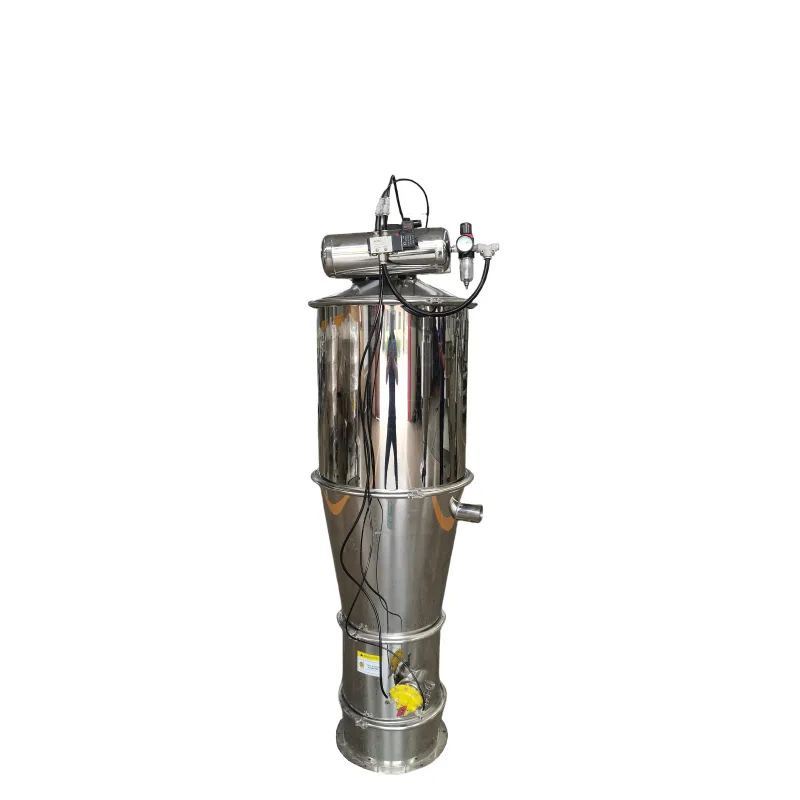
Material Characteristics Matching
Selecting a vacuum feeding machine starts with a thorough analysis of powder material properties, the fundamental factor that determines all equipment configuration choices. Fine powder materials with particle sizes below 0.1mm require high-precision filtration components with 0.3μm filtration accuracy to prevent material loss and filter blockage, while hygroscopic and caking-prone powders need additional arch breaking devices and dry air protection systems in the feeding machine. For flammable and explosive powder materials such as some chemical additives and metal powders, the whole set of equipment must be equipped with anti-static pipelines and electrostatic conduction systems to eliminate potential safety hazards during transportation. Industry data shows that over 60% of equipment operation failures are caused by inconsistent matching between equipment configuration and material characteristics, so detailed testing of material density, fluidity and other parameters before selection is an essential step.
Technical Compliance and Industry Standards
Compliance with international and industry authoritative standards is a non-negotiable requirement for selecting a vacuum feeding machine, especially for food, pharmaceutical and chemical industries with strict production norms. Food grade powder processing must meet FDA and GB 4806 food contact material standards, and the equipment body should use 304 or 316L stainless steel with inner wall polishing treatment to ensure no material residue and easy cleaning. Pharmaceutical production needs to follow GMP clean workshop standards, and the equipment should support CIP and SIP online cleaning functions to avoid cross contamination. For European and American market-oriented production enterprises, the equipment must also pass ATEX explosion-proof certification when handling flammable and explosive powders, which is the basic threshold for the equipment to enter the international market. Reputable manufacturers in the industry will mark all compliance certifications of the equipment clearly, and the certification documents can be verified through official channels, which is an important basis for judging the reliability of the equipment.
Practical Application Case Insights
Practical application cases in different industries can provide direct and valuable reference for the selection of vacuum feeding machines. In the soy milk powder production industry, a customized intelligent vacuum feeding system was applied in a large-scale production base, which solved the problems of dust overflow and low transportation efficiency in the traditional manual feeding process. The closed transportation structure of the equipment reduced the material loss rate of soy milk powder by more than 3% and improved the production line efficiency by 25%. In the flour milling industry, vacuum feeding machines are widely used for the transportation of wheat flour, effectively avoiding the safety risks of dust explosion caused by traditional mechanical transportation methods. The actual application effect shows that for large-scale continuous production lines, the vacuum feeding machine with a conveying capacity of 500-6000 kg/h can better match the production rhythm, while small and medium-sized production workshops can choose equipment with a conveying capacity of 50-500 kg/h to achieve cost performance optimization.
Equipment Performance and Maintenance Considerations
Key performance indicators and subsequent maintenance convenience are important factors affecting the long-term operation of vacuum feeding machines, and need to be focused on during selection. The vacuum degree of the equipment is generally controlled between -0.04 and -0.09 MPa, which is the optimal range to ensure stable material transportation and avoid material damage caused by excessive vacuum. The noise of the equipment during operation should be no more than 75 dB(A) to meet the industrial production environmental protection requirements and protect the health of operators. In terms of maintenance, the equipment with modular design and quick-install clamp connection can greatly shorten the maintenance time. The filter element, as a core consumable part, needs to have an automatic back blowing cleaning function, and the replacement cycle should be clearly marked by the manufacturer. For enterprises with continuous production requirements, the equipment with double filter element alternate use design can avoid production interruption caused by filter element maintenance, which is a very practical configuration.
Commercial Value and Cost Efficiency
Selecting a vacuum feeding machine is not only a technical choice but also a commercial decision that needs to balance performance and cost efficiency. From the perspective of long-term operation, the investment in high-quality vacuum feeding equipment can be quickly recovered through the improvement of production efficiency and the reduction of material loss. The market price of basic vacuum feeding machines with a conveying capacity of less than 500 kg/h is relatively moderate, suitable for small and micro enterprises with low production capacity; medium-sized equipment with a conveying capacity of 500-2000 kg/h has a higher cost performance and is the mainstream choice for most medium-sized production enterprises; large-scale customized systems with screening and weighing linkage functions are suitable for large enterprises with high automation requirements, and the investment return cycle is generally within 1-2 years. At the same time, the after-sales service system of the manufacturer should be considered during selection, including on-site installation guidance, operation training and after-sales maintenance response speed, which can effectively reduce the subsequent operation and maintenance costs of the enterprise.
Key Selection Criteria for On-Site Application
Integrating all the above factors, the final selection of vacuum feeding machines needs to be closely combined with the actual on-site production conditions of the enterprise. First, the equipment configuration should be determined according to the specific characteristics of the powder materials and the production process requirements, and avoid blind pursuit of high parameters that do not match the actual needs. Second, the manufacturer's industry application experience and technical strength should be investigated, and priority should be given to manufacturers with successful cases in the same industry. Third, the on-site layout of the production line should be fully considered, the horizontal transportation distance of the equipment should be controlled within 10 meters as much as possible, and the number of elbows should be reduced to the minimum to ensure the transportation efficiency. Finally, a complete trial operation plan should be formulated before the formal purchase, and the actual operation effect of the equipment should be tested on site to ensure that the equipment can fully meet the production needs of the enterprise. The scientific selection of vacuum feeding machines can not only realize the intelligent upgrade of the powder material transportation process but also lay a solid foundation for the long-term stable development of the enterprise's production and operation.