
 EN
EN
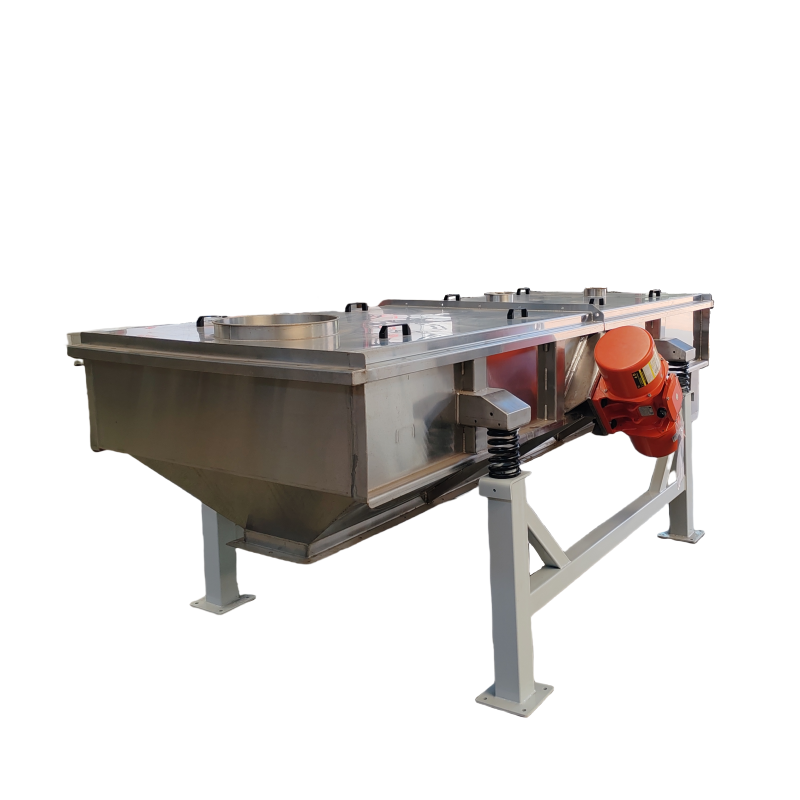
Introduction to Vibrating Screen Applications
For the food and beverage industry and so many more, a vibrating screen is a crucial part of the operation because it separates the materials and helps keep the operation organized. It regulates the vibrations based on the size of the materials, and from there even the food processing industry is able to use it to their advantage. For manufacturers to be able to use a vibrating screen to the best of their abilities, it is important to understand the full capability of the vibrating screens.
Food and pharmaceutical grade materials
In the food and pharmaceutical industry, screens must abide by strict cleanliness and accuracy regulations. In the food industry, screens must be able to satisfy the criteria to use food grade materials, such as flour, sugar, salts, and milk. In the milk industry, screens are necessary to sift impurities, making it an essential part of the production process.
Chemical and Petrochemical Materials
Because of the versatility that screens provide, the processing of fertilizers, pigments, resin, and plastic pellets is made easier. In the petrochemical industry, screens are used to separate catalysts, and polymer materials, and to filter impurities from crude oil and its derivatives. Many of these materials require screens with components that withstand harsh chemical environments.
The chemical industry has documented a decrease of 30% in material waste and an increase in production efficiencies with the use of vibrating screens. Industry experts attribute this to the screens being able to adjust in vibration frequency, giving them more control over the separation process, making them ideal for chemical processing, whether in a dry or wet state.
Building Materials and Equipment
Screens that vibrate can work with varying materials such as sand, gravel, crushed stones, and limestone. They can also be used to sift through cements, concrete additives, and dry mortars.Construction experience shows that the screens lead to increased end-product quality. For example, in a large-scale construction project, these screens classified sand and created a more even concrete mixture which minimized cracks and increased structural integrity. The construction industry standards, specifically the American Society for Testing and Materials (ASTM), acknowledge the contribution of vibrating screens to safe and consistent classification of materials.
Mining Metallurgy Materials
Screens are used for sorting metal powders, alloys, and scrap metals. In mining, they are used for pre-concentration, which decreases the amount of material sent to crushers to process more efficiently. Data mining has revealed that screens boost the recovery of minerals by 15 to 20% when compared to older screening methods. Experts attribute this recovery to the screens penetrating deep into packed materials and separating with high precision. Most screens are constructed using mining wear materials to withstand the abrasive and lengthy operational processes.
Filtration Technologies and Environmental Protection
Vibrating screens are essential tools in waste treatment, water filtration, and air purification to help with environmental protection. They supe screeners and sewage screens sludge, industrial wastes, and are even used in the recycling of microplastics and paper pulp. They serve to remove solid wastes in laundries, making waste disposal and recycling of resources more easy. In water treatment They use screens to improve water quality by filtering out suspended solids to comply with environmental discharge criteria.
Vibrating screens are recognized by environmental authorities for their contribution to reusing, recycling, and reducing. For instance, in a recycling municipal waste treatment plant, implementing vibrating waste screens to separate circulable materials elevates recycling by 25% and thus, passively decreased landfill waste. Additionally, due to the screens, industries are keeping solid-liquid separation in their processes to avoid fines and losing their good name by keeping widespread environmental policies.
Versatile Material Processing Technical Advantages
One of the reasons why vibrating screens have the ability to process such a diverse range of materials is due to their unique technical properties. The ability to use a combination of meshes, adjustable amplitude, and frequency of vibration give amplitude and frequency a broad sorting range over various materials. The best vibrating screens patented inclusive vibration technology is core to its vibration technology. Additionally, screens positioned at optimum angles with the highest quality raw materials in process, are the best quality screens.
The screens are constructed with corrosion-resistant materials. This means they can be used in both clean and dirty environments. Smart controlling systems allow for real-time adjustments to be made to maintain the same consistent performance regardless of the screen's changing attributes. These advantages are purely technical. However, they expand the range of materials the screen can process and increase efficiency while lowering maintenance costs.
How Versatile Screens Translate to Commercial Profit
Industries are able to gain tremendous commercial value by processing a variety of materials through the screens. Because the screens process a variety of materials, there is no need for specialized equipment. This means capital and operational costs do not need to be overspent. Because of better processing efficiency, there is a higher production output. This, along with excellent classification of materials, results in a considerable boost in product quality.
The screens are highly sought after in international markets due to the reliability of these screens and the screens reputation for performance. Because of the screens performance, companies have outstanding after-purchase value due to long, efficient screen lifespans. This value also leads to a long return on investment.
Conclusion
Industries such as food, pharmaceuticals, chemicals, construction, mining, and the environment utilize vibrating screens for processing various materials. These screens, having an array of specific industry advantages such as adaptable engineering, smart control, and robust construction, show the potential to satisfy industry-specific needs. With vast experience, expert knowledge, and industry specific standards, screens achieve operational excellence and commendable commercial returns. Whether processing fine food powders or heavy mining ores, vibrating screens continue to be a critical component in optimizing production processes.
Table of Contents
- Introduction to Vibrating Screen Applications
- Food and pharmaceutical grade materials
- Chemical and Petrochemical Materials
- Building Materials and Equipment
- Mining Metallurgy Materials
- Filtration Technologies and Environmental Protection
- Versatile Material Processing Technical Advantages
- How Versatile Screens Translate to Commercial Profit
- Conclusion