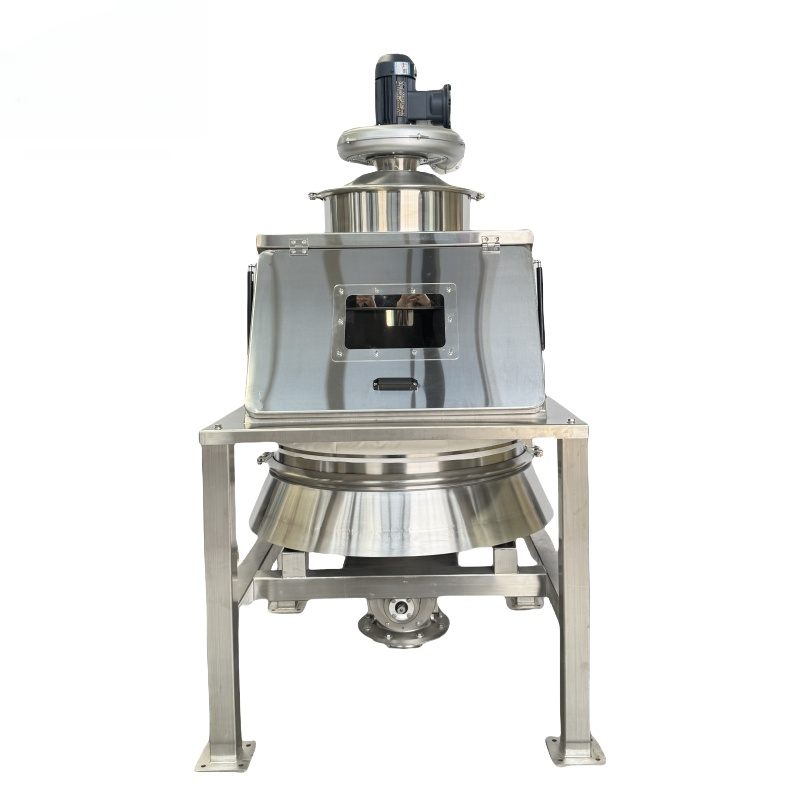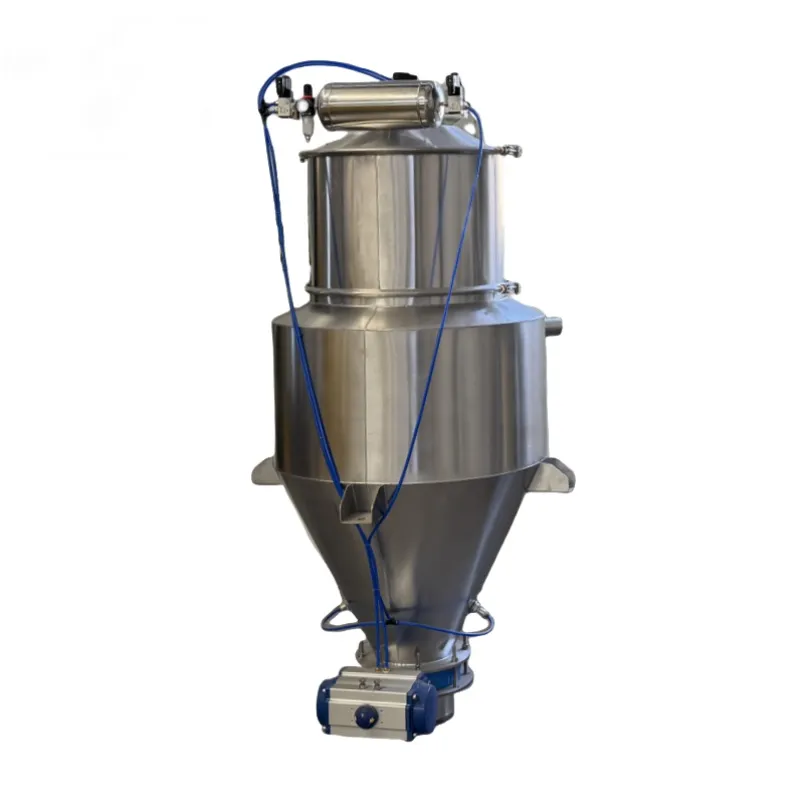
In modern industrial operations, pneumatic powder conveying systems have become strategic core equipment for ensuring production efficiency and product quality. These closed-pipe systems have completely revolutionized the way powdered materials are handled, eliminating external contamination (such as moisture, impurities, and oxidation risks) to ensure that high-purity raw materials in industries such as food, pharmaceuticals, and chemicals maintain stable composition during transportation. For mixed powders prone to stratification (such as cosmetic raw materials or industrial catalysts), their gentle conveying characteristics precisely maintain particle uniformity, preventing batch-to-batch quality variations.
The efficiency advantages of pneumatic systems are equally transformative—vertical/horizontal conveying distances can exceed 300 meters, with transmission speeds over 70% faster than manual or mechanical methods. Its flexible pipeline layout significantly optimizes factory space utilization and can seamlessly integrate into production lines to achieve full-process automation. In terms of economic benefits, the system significantly reduces manual handling costs and related workplace injury risks, while its near-zero leakage design saves tens of thousands of dollars annually in material losses for high-value materials. Modern low-energy models further reduce air consumption by 40-60%, continuously cutting operational expenses.
Safety is the core value that makes this technology irreplaceable. When conveying flammable dust (such as metal powders), the system employs ATEX explosion-proof design to eliminate ignition sources. The sealed piping system provides safe isolation for highly toxic chemicals (such as pesticide raw materials), significantly reducing occupational health risks. This inherently safe characteristic enables the system to easily comply with the world's most stringent industry standards, including FDA, GMP, and OSHA, particularly in high-sensitivity processes such as the transfer of pharmaceutical raw materials.

30
May
29
May
18
Jun
"Before installation, manual handling was killing our production speed and safety records. Since implementing this system, our line efficiency jumped by 40%. The ROI was clear within months – reduced labor costs and zero handling injuries in 18 months. Seamless integration with our packaging line was the cherry on top."

"We struggled with product damage during transfer for years. This gentle conveying solution eliminated breakage completely while meeting strict FDA sanitation standards. Maintenance is surprisingly simple, and downtime dropped by 70%. Worth every penny for quality-sensitive industries."


Copyright © Henan Zhongren Machinery Equipment Co., Ltd.
 EN
EN