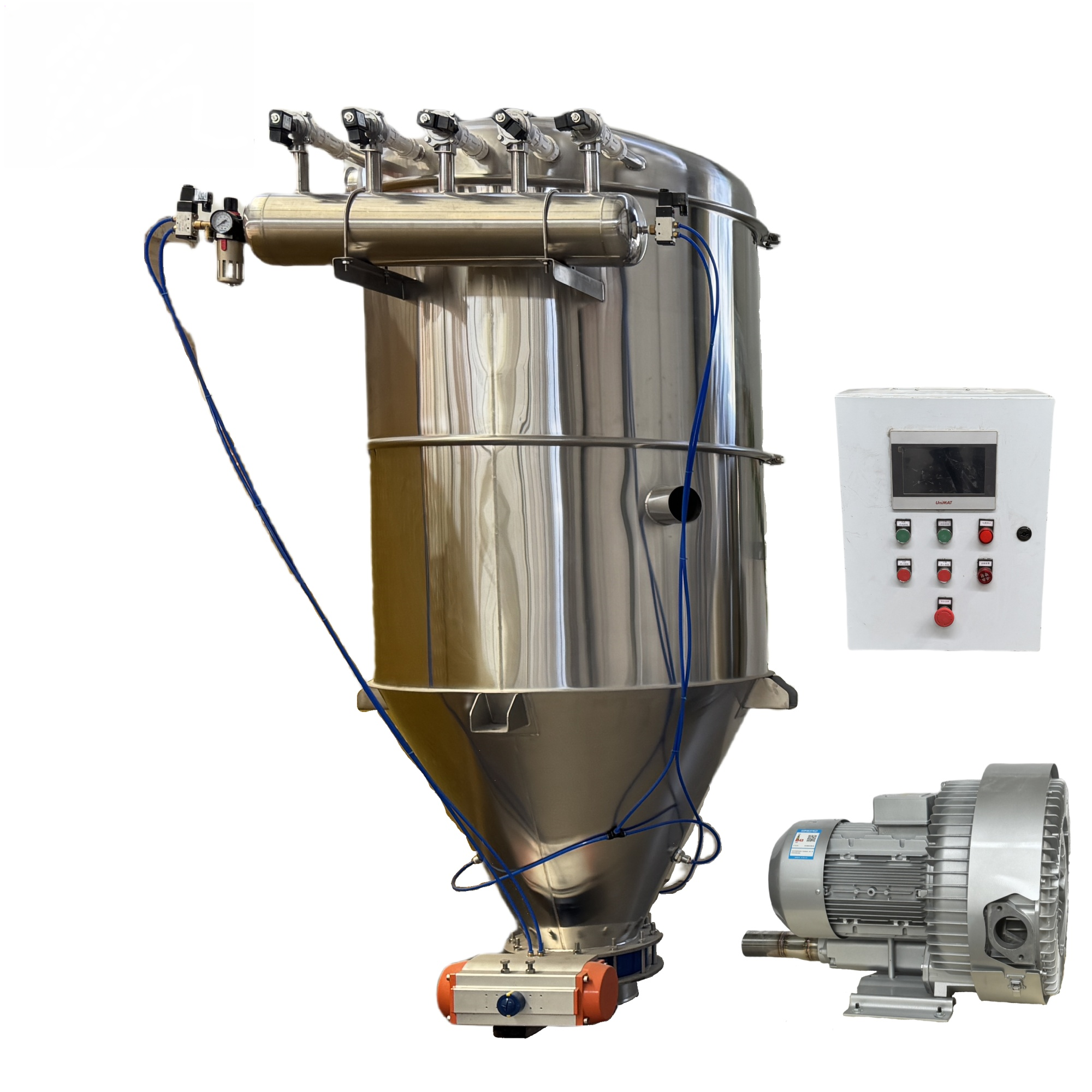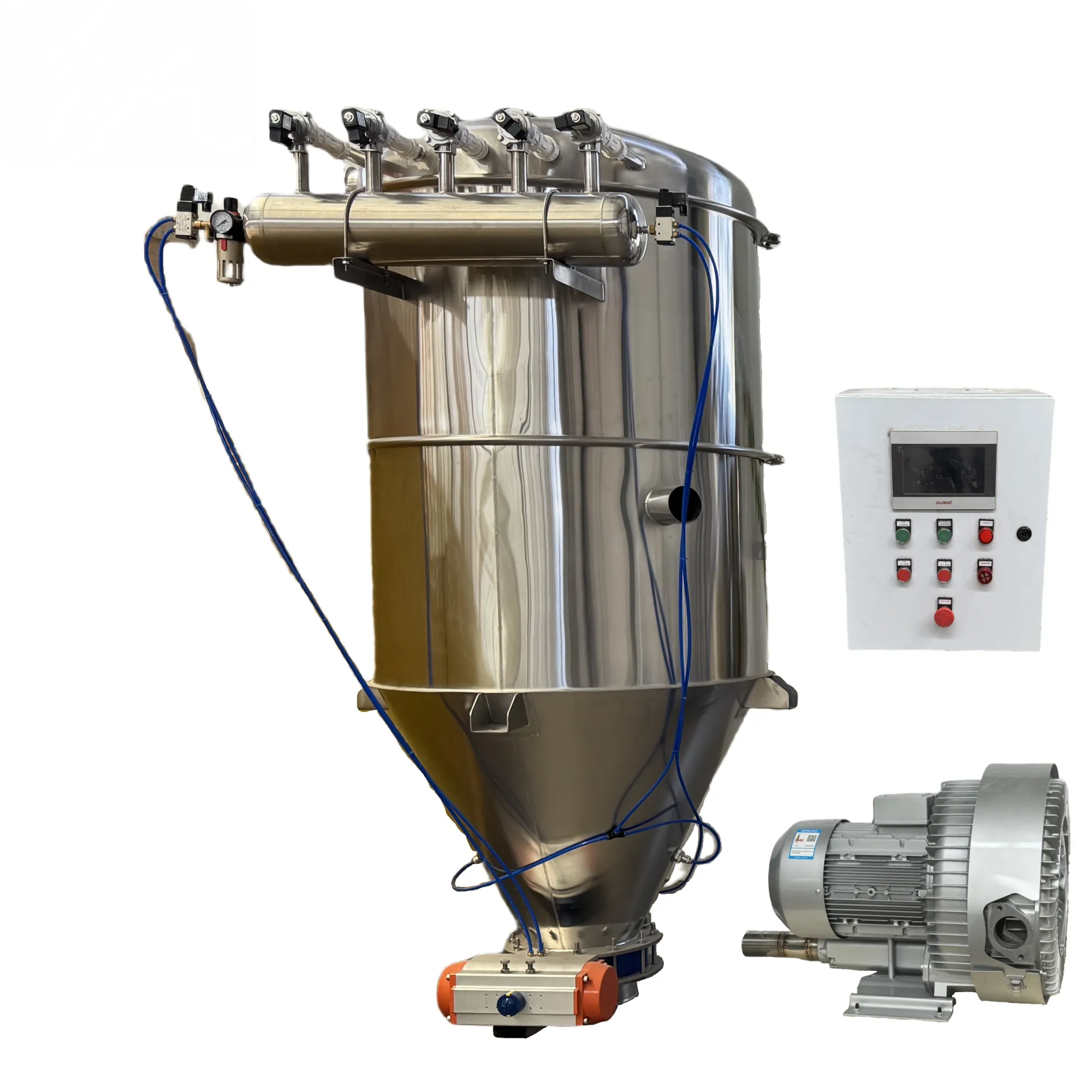
Analysis of the Application Prospects of Vacuum Conveying Systems
Vacuum conveying systems are revolutionizing material handling processes across multiple industries thanks to their outstanding safety, efficiency, and contamination prevention characteristics. With the global manufacturing industry undergoing automation upgrades and increasingly stringent regulatory standards, the application of this technology has broken through traditional boundaries. While continuing to deepen its penetration in core industries such as pharmaceuticals, food, and chemicals, it is rapidly expanding into emerging fields such as new energy and advanced manufacturing.
Deepening Application in Core Industries
In the pharmaceutical and health supplement industry, the system is widely used for the sterile, closed-loop transportation of active pharmaceutical ingredients (APIs), excipients, tablets, and powders. The core drivers of industry growth stem from three key directions: the demand for safe production of potent compounds (OEB 4/5 grade), compliance requirements under the Current Good Manufacturing Practice (cGMP) and FDA 21 CFR Part 11 regulations, and the widespread adoption of continuous production processes under the Pharmaceutical 4.0 trend.
Typical applications in the food and beverage sector include the hygienic conveying of powdered materials such as infant formula, flour, and additives, as well as granular materials like sugar and salt. Industry upgrades rely on three pillars: hygienic design standards compliant with EHEDG/3A certification, allergen cross-contamination prevention requirements, and efficiency improvements in automated batch production under the Food Industry 4.0 framework.
The chemical and plastics industry primarily handles pigments, resins, catalysts, polymer particles, and hazardous powders. Market expansion is driven by: compliance requirements for explosive environments (ATEX/IECEx), growing demand for inert gas purging systems, and the trend toward process intensification.
Explosive growth in emerging fields
New energy battery manufacturinghas become a key growth driver, with systems used for the precise transfer of electrode materials such as graphite and lithium compounds, as well as nanomaterials, in cleanrooms. According to industry forecasts, global electric vehicle battery production is expected to grow by over 500% by 2030, driving the rigid demand for dust-proof and anti-static conveying solutions.
In the cannabis and health supplement processing sector, systems enable automated, precise feeding of THC/CBD powders and plant extracts. As global legalization accelerates, investment in GMP-compliant facilities continues to grow.
In the additive manufacturing (3D printing) sector, systems address material feeding issues for metal powders, nylon, and composite materials into printing equipment. With the annual growth rate of industrial-grade 3D printing exceeding 20%, there is a surge in demand for safe handling of high-value, high-activity powders.
Sustainability-driven transformation
Vacuum conveying systems drive green manufacturing through three key pathways: reducing material loss by up to 30% compared to manual operations (particularly critical for high-value raw materials); achieving energy consumption reductions of 30-50% compared to traditional pneumatic conveying systems; and supporting the circular economy by enabling safe production loops for materials such as recycled plastic pellets and recovered chemicals.

30
May
29
May
18
Jun
"Before installation, manual handling was killing our production speed and safety records. Since implementing this system, our line efficiency jumped by 40%. The ROI was clear within months – reduced labor costs and zero handling injuries in 18 months. Seamless integration with our packaging line was the cherry on top."

"We struggled with product damage during transfer for years. This gentle conveying solution eliminated breakage completely while meeting strict FDA sanitation standards. Maintenance is surprisingly simple, and downtime dropped by 70%. Worth every penny for quality-sensitive industries."


Copyright © Henan Zhongren Machinery Equipment Co., Ltd.
 EN
EN