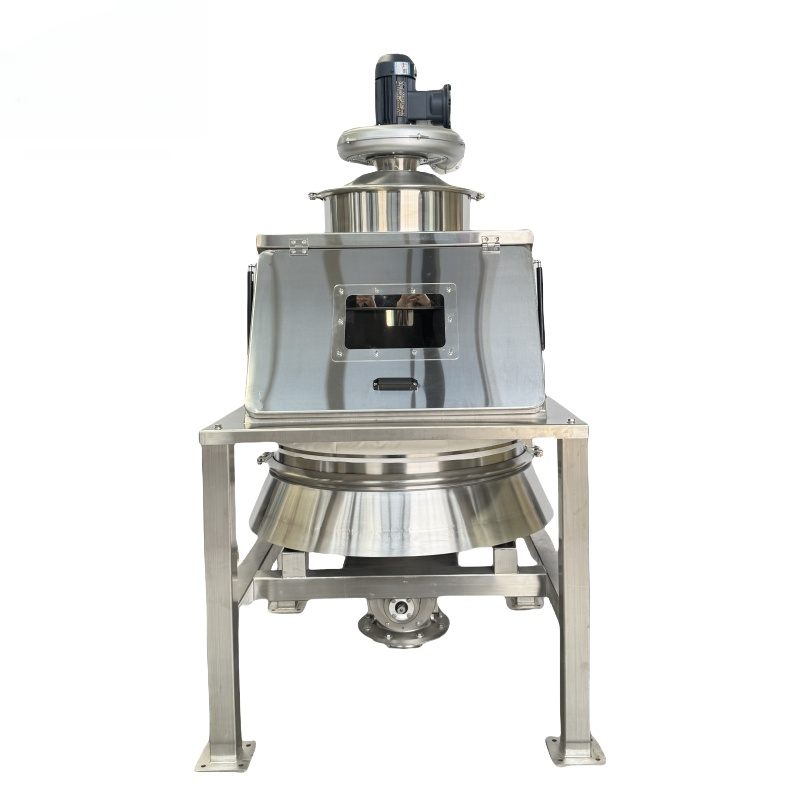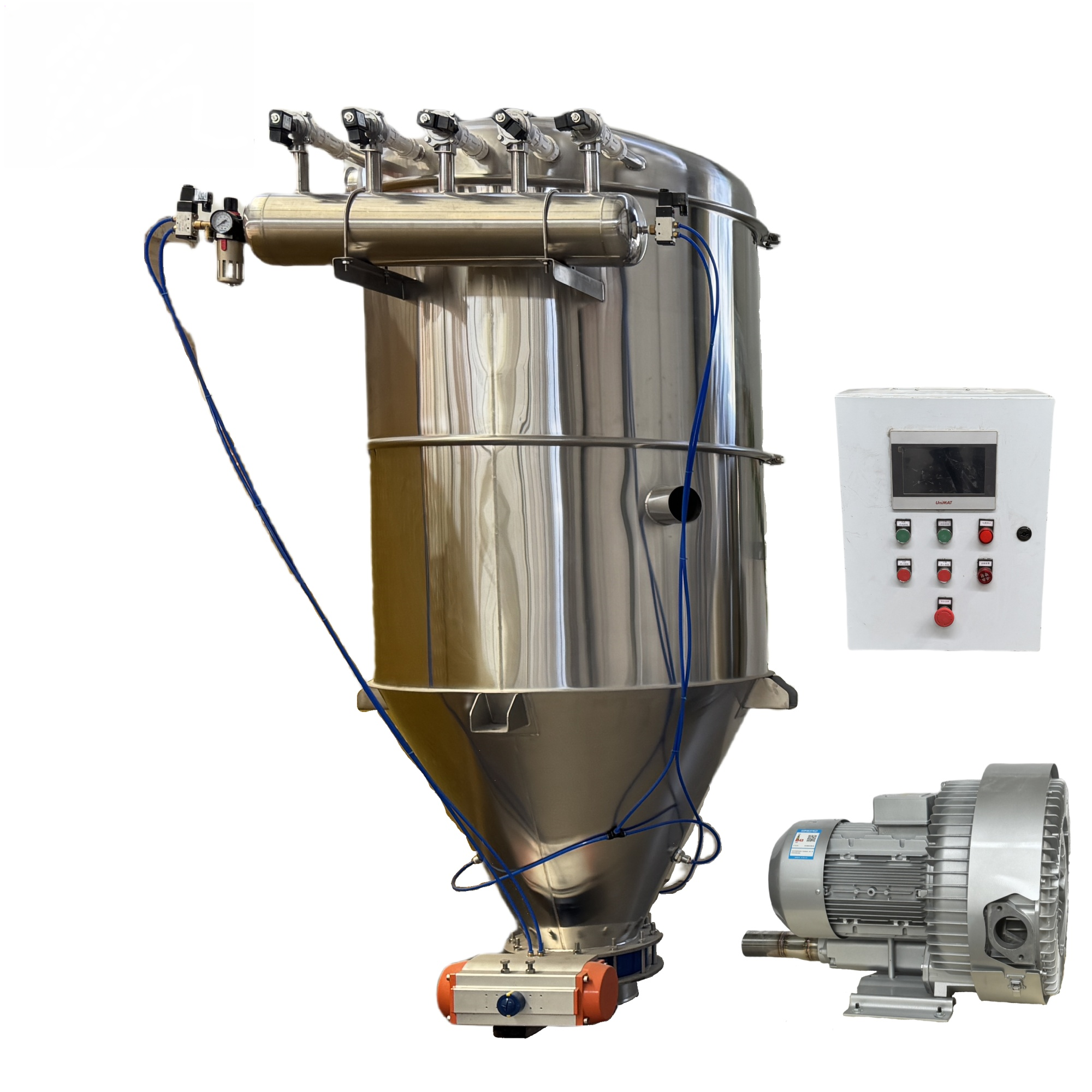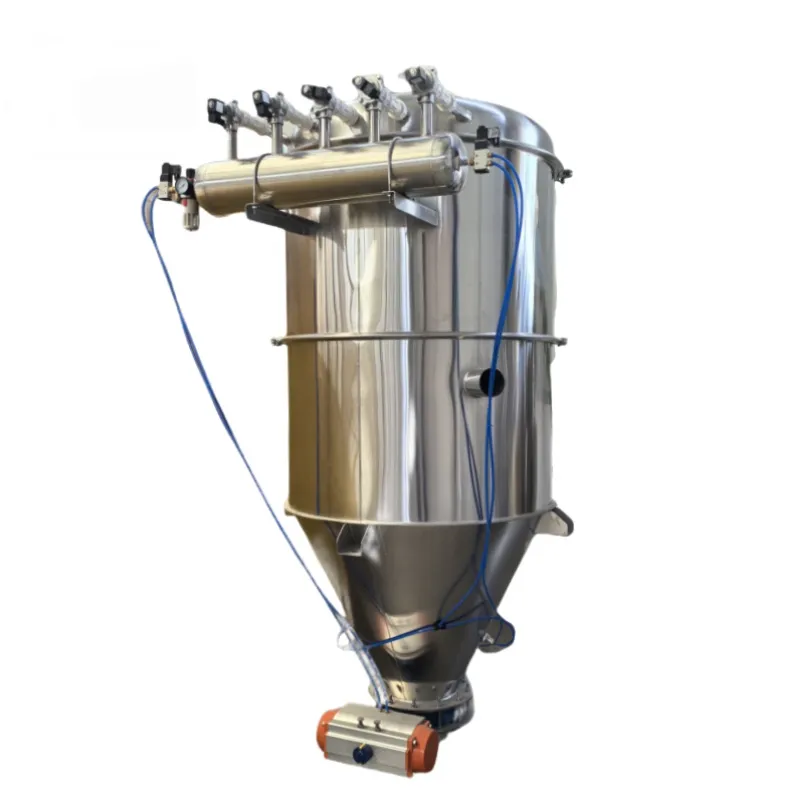
The core value of powder vacuum conveying systems: surpassing traditional material handling solutions
In modern industrial production, especially in core industries such as food, pharmaceuticals, and chemicals that have extremely high requirements for safety, purity, and efficiency, powder vacuum conveying systems have evolved from an optional choice to essential infrastructure for ensuring competitiveness and compliance. Its fundamental significance lies in its revolutionary solution to a series of core pain points associated with traditional manual pouring or mechanical conveying methods.
The primary value lies in its unparalleled safety assurance. The system operates in a fully enclosed state, eliminating dangerous dust exposure at its source—this not only directly protects operators from respiratory health threats and potential explosion risks (meeting stringent explosion-proof requirements such as ATEX/DSEAR), but also significantly reduces slip hazards and environmental pollution risks caused by dust leakage, establishing a robust safety barrier for enterprises.
In terms of improving operational efficiency and economic benefits, the system also excels. It achieves full automation of the powder transfer process, directly replacing labor-intensive and error-prone manual operations. This not only significantly reduces labor costs (by up to 70%) but also significantly shortens batch production time and accelerates equipment turnover through its fast, continuous conveying capacity (up to 8 tons per hour). Additionally, its modular design supports quick switching between different containers or production lines, further enhancing production flexibility and overall efficiency.
For companies where product quality is critical, this system is key to ensuring purity. Its enclosed design and contactless conveying method provide the ultimate solution for preventing cross-contamination, making it particularly suitable for sterile production environments (such as GMP and FDA-regulated areas). Additionally, the gentle vacuum conveying mechanism minimizes impact on powder particles, fully preserving the raw materials' original properties and functionality.
In terms of reducing total cost of ownership (TCO), its advantages are evident. Closed conveying significantly reduces costly raw material loss (caused by spills or incorrect metering); its simple structure (without complex mechanical components like chains or belts) results in minimal maintenance requirements and reduced downtime; Furthermore, surfaces and structures designed for easy cleaning significantly reduce the time and cost required for cleaning between batches (by up to 50% or more), making it particularly suitable for high-standard hygiene requirements such as CIP/SIP.

30
May
29
May
18
Jun
"Before installation, manual handling was killing our production speed and safety records. Since implementing this system, our line efficiency jumped by 40%. The ROI was clear within months – reduced labor costs and zero handling injuries in 18 months. Seamless integration with our packaging line was the cherry on top."

"We struggled with product damage during transfer for years. This gentle conveying solution eliminated breakage completely while meeting strict FDA sanitation standards. Maintenance is surprisingly simple, and downtime dropped by 70%. Worth every penny for quality-sensitive industries."


Copyright © Henan Zhongren Machinery Equipment Co., Ltd.
 EN
EN