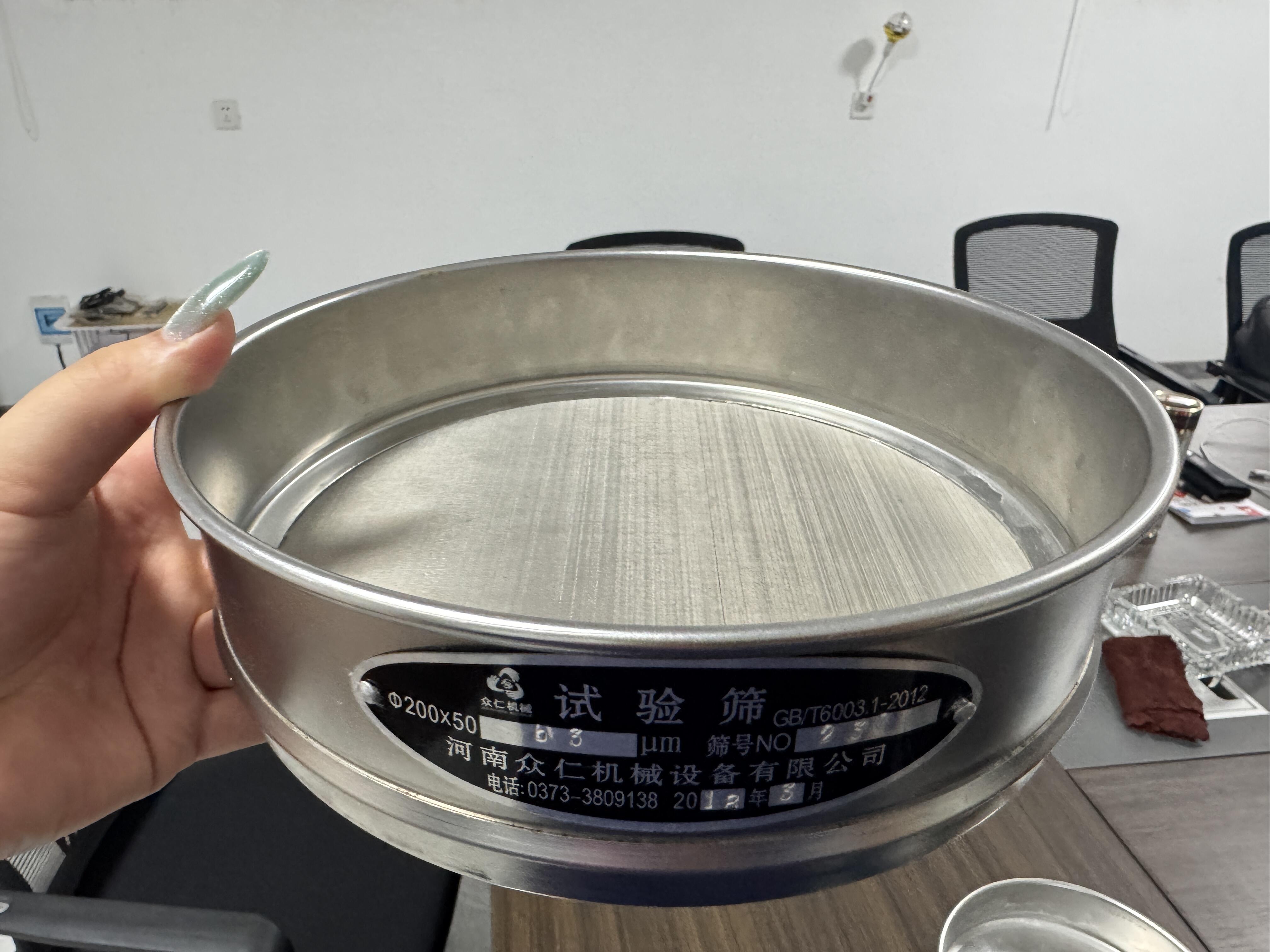
The 100 mesh sieve, which corresponds to approximately 0.149 mm or 149 microns, is widely used in the pharmaceutical and chemical industries for particle size analysis and quality control. In pharmaceutical manufacturing, it ensures powders and active ingredients meet specific fineness standards critical for drug formulation, dissolution rates, and dosage uniformity. The 100 mesh sieve helps manufacturers comply with regulatory standards such as USP and ISO by verifying that particles are within the desired size range. In the chemical industry, it is used to classify fine powders, pigments, and raw materials, ensuring consistency in product performance, reaction efficiency, and safety. Its precise mesh size makes it indispensable for maintaining high standards in production and research environments.
In the food processing, cosmetics, and agricultural industries, the 100 mesh sieve in mm plays a vital role in ensuring product quality, texture, and safety. In food production, it is used to sift flour, sugar, spices, and other dry ingredients to achieve the desired consistency and remove unwanted particles. In cosmetics, it helps refine powders such as talc, foundation bases, and face masks, contributing to smooth application and product uniformity. The agricultural sector utilizes the 100 mesh sieve to classify seeds, fertilizers, and soil amendments, ensuring even distribution and optimal nutrient delivery. By removing oversized or undersized particles, this sieve size supports product consistency, enhances consumer satisfaction, and improves process efficiency across these diverse sectors.
The 100 mesh sieve in mm is also essential in construction, mining, and material testing laboratories for analyzing aggregates, soils, and construction materials. In construction, it aids in assessing fine aggregates used in concrete and mortar, ensuring proper particle distribution for strength and durability. In mining, it helps classify fine ore particles before further processing, improving efficiency in extraction and beneficiation. Material testing labs use the 100 mesh sieve to conduct particle size distribution tests according to standards like ASTM and ISO, supporting quality assurance and compliance. Its standardized mm size (0.149 mm) makes it a reliable tool for professionals who require accurate, repeatable results in material characterization and quality control workflows.
20
Jul
20
Jul
20
Jul
20
Jul
These ASTM-certified test sieves revolutionized our lab's particle analysis. The laser-etched mesh and stainless steel frame eliminated measurement drift—we finally trust our gradation data

These high-quality test sieves offer outstanding precision and are indispensable tools in our soil analysis research. They provide the stable particle separation we need to ensure data repeatability, and their reliability proves the value of the investment.


Copyright © Henan Zhongren Machinery Equipment Co., Ltd.
 EN
EN