
 EN
EN

How to Install a Vacuum Feeding Machine Correctly?
Check Core Requirements for the Installation Environment
When getting ready to set up the machine, always check to make sure the desired location meets the machine's core operating requirements. The location should be flat and stable, so that there will be no vibration that affects the machines' feeding accuracy and overall lifespan. It is best to set up the machine in a dry room with good ventilation, with the temperature always between 5 to 40 degrees celsius. Any humidity and extreme heat or cold can damage the machines' internal electronics as well as its airtight structures. When setting up the machine, make sure there's at least 30 cm of space on all sides of the machine for maintenance and monitoring. If your workplace involves food, drugs, or chemicals, make sure to also follow the hygiene and safety requirements of that environment so that the machine does not get polluted on the outside or the transported contents. All of this preparation would also set the machine up to function smoothly and reliably, laying the ground for improved efficiency and cost control.
Confirm Compatibility of Matching Components
The vacuum feeding machine can only exert its optimal performance when all companions match each other. Firstly, confirm whether the connecting pipes are compatible with the machine’s interface specifications. Pipes that are too thick or too thin will lead to air leakages or material clogging resulting in an efficiency drop and an increase in the overall energy consumption. Therefore, pipes of the same material and specification as the equipment manufacturer are recommended to provide tightness and optimal material flow.
Secondly, confirm the power supply and control system. The voltage and frequency of the power supply should match the equipment’s rated parameters. Otherwise, a voltage mismatch will cause a short circuit or burnout of the motor. With respect to the intelligent control system, ensure that it is designed to interface with the production line automation equipment, enabling synchronous operation and data transfer. Compatibility among these components, as the other components of the production line, is imperative. The excess costs that incur in regular maintenance due to mismatch are eliminated, and the overall equipment efficiency improves, thanks to the lower maintenance costs.
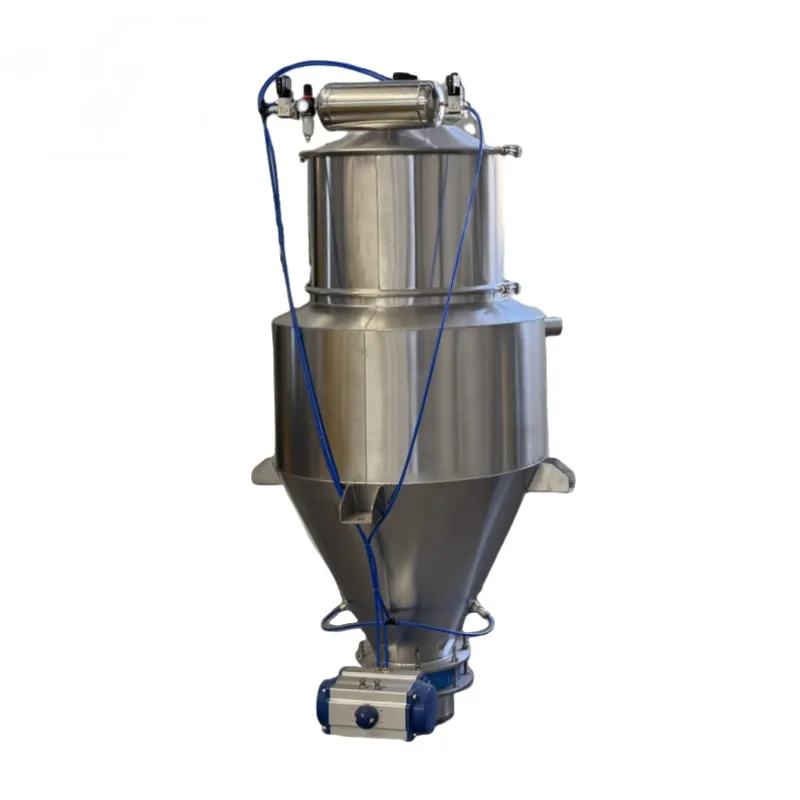
Major Steps in Installation
Assuring that every machine component will work as expected. Start with securing the main machine: Place the main machine on the foundation that should already be in place. Ensure main machine will not be tilted, as an uneven main machine is a cause of imbalanced stress on the components of the machine. This will result in wear and a significant decrease in the expected lifefot at the machine's parts.
Now, let’s move on to the attachments of pipes and other parts of the system. When securing the feed pipe, use a professional grade sealant to prevent air loss through the interface. Exercise caution and ensure that there is no damage to the filter element, as it is the most important component in preventing any material dust from reaching the vacuum pump. After finishing with the components, take time to manually examine the system. This is to check on the connections and the movable components. Ensure that there is no lose cable or a stuck component.
Finally, perform a test run of the control system. Connect the power supply, switch on the device while it is in an empty load state, and observe if the suction power, control functions, and feeding speed are all normal. During the execution of all functions, listen to see if there is any unusual noise or vibration, and adjust if you observe any problems. Following the standard installation steps will save time and labor costs by avoiding the need for additional rework and debugging.
Consider the Most Important Quality Control Aspects.
Quality control of the installation will certainly affect the quality of the subsequent operation and life of the vacuum feeding machine. One of the most important Control of the Quality Air is: after installation, use a barometer to check the air pressure in the system. If the pressure drop is controlled to a range of standards, there is an air leak, which should be located and removed. Poor Air Control will reduce the feeding efficiency and will in a more pronounced way affect the cost efficiency of the equipment.
The installation of contact parts in the equipment used in food and pharmaceutical industries is another crucial point for quality control. Contact parts must be made of food-grade or pharmaceutical-grade material and must be installed without any dead corners or gaps to prevent material build-up and bacteria. After installation, the contact parts must be cleaned to remove any contaminants and ensure they meet hygiene requirements.
In addition, the installation of safety protection devices is also very important and must be taken into consideration. Emergency stop buttons, overload protection and other safety devices must be reliable, sensitive and the warning signs visible and clear. These measures can effectively prevent operational safety accidents, protect the personnel and equipment safety, and minimize potential economic losses.
Achieve Long Term Value with Professional Installation
A machine that gets proper value long term will avoid frequent breakdowns and costly repairs. For instance an installed machine that is air tight will not spend an extra 15-20 percent beyond the inequitably installed machine, if the machine is also installed and fixed correctly, the lifespan will be extended 3-5 beyond the resource.
From a business perspective, a vacuum feeding machine that is able to sustain depends on factors such as the production line and the standard of the finished product. This primarily places the business on a better perspective on the market. Their value and cost-effectiveness is greatly seen on those business on food, pharmacy and chemical due to the flexibility on their installations. Operating cost is reduced. Promoting the market share and credibility of the business is a cost saving daily operation.
If the equipment is installed properly, it will integrate well with the automated systems for real-time data monitoring and smart control, allowing businesses to achieve a more efficient and smart production model. The value of this equipment will certainly increase over time, and this is one of the many reasons why the equipment is worth the price.


