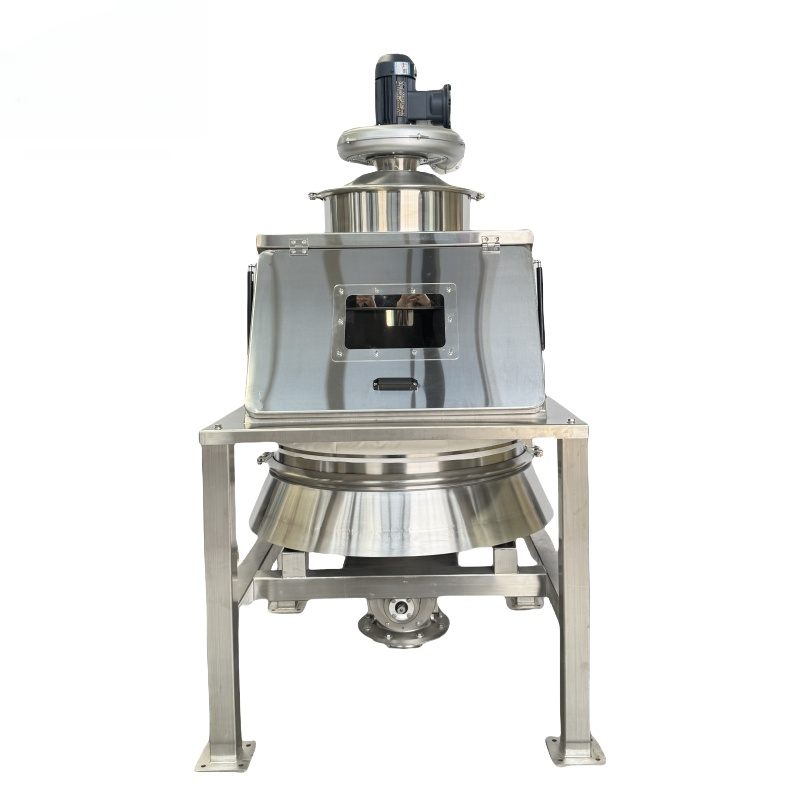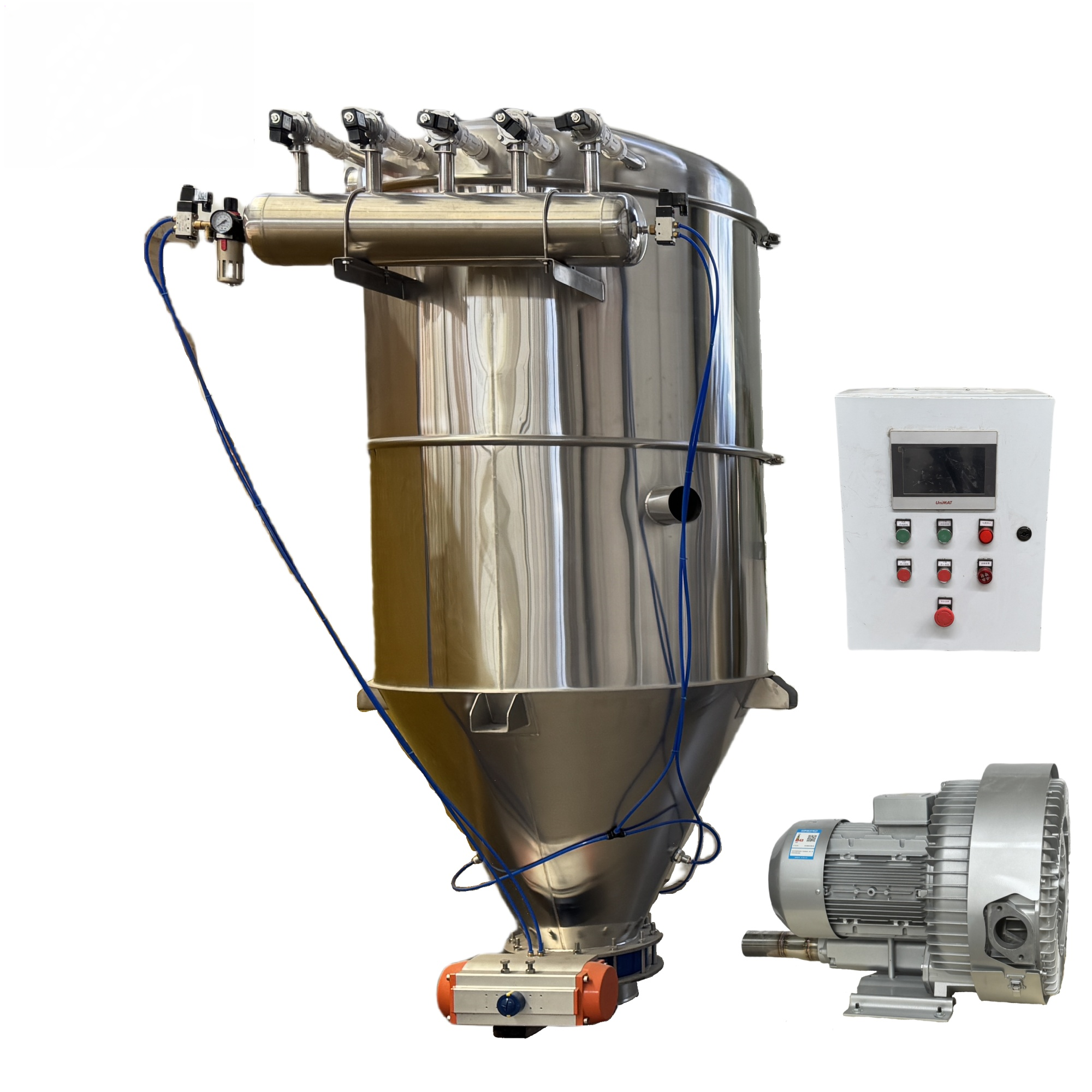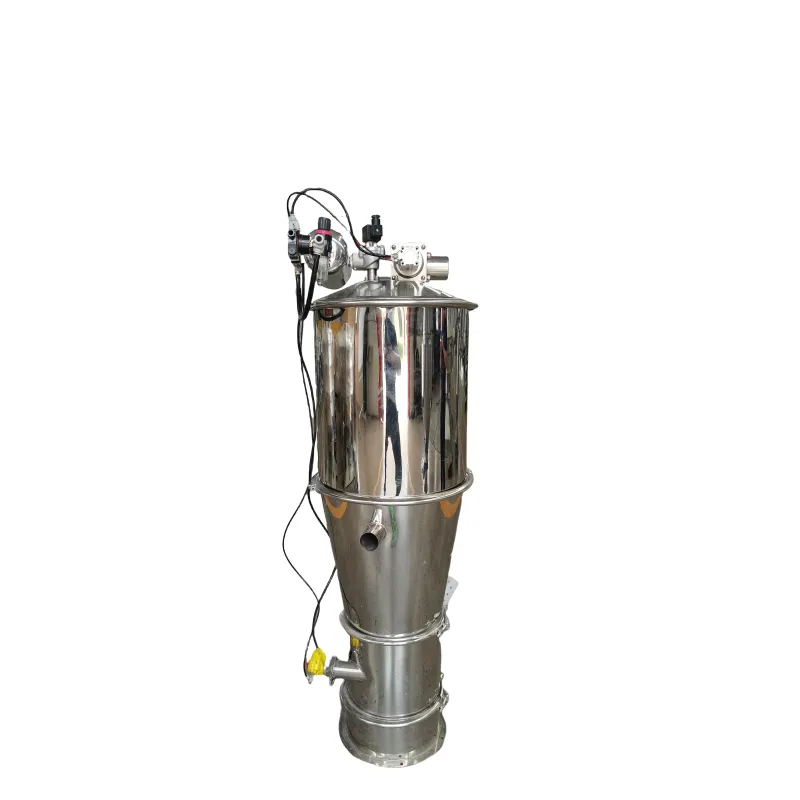
In the fine chemicals, pharmaceutical, and food industries, powder conveyors have become a core infrastructure for modern production, fundamentally resolving the three major challenges posed by traditional manual handling or open-type conveying. When companies face the need to handle several tons of powdered materials per hour, open-top operations not only result in raw material losses of up to 3-5%, but also pose a risk of dust explosions—according to NFPA standards, combustible dust (such as milk powder or metal powder) with a thickness exceeding 0.8mm can ignite and explode upon contact with static sparks. A professionally designed enclosed powder conveying system, with a dust capture rate of 99.9% and ATEX explosion-proof certified structure, directly reduces safety production costs by over 40%.
More importantly, this equipment directly impacts the quality of the final product. A multinational pharmaceutical company once suffered losses exceeding $2 million due to agglomeration issues during API raw material conveying, resulting in excessive dissolution rates for the entire batch of medications. After adopting a pneumatic conveying system with turbulence control technology, by precisely adjusting the airflow velocity and the smoothness of the pipeline inner wall (Ra ≤ 0.4 μm), the degradation rate of active ingredients was successfully controlled below 0.3%, while also meeting the FDA's stringent requirement of ≤10 ppb for cross-contamination. This level of quality stability is the core competitiveness of pharmaceutical companies in obtaining GMP certification.
From an operational perspective, the value of powder conveyors is reflected in three key metrics: automating 80% of manual feeding positions, saving a certain infant formula factory $370,000 in annual labor costs; modular design reducing equipment footprint by two-thirds, creating an additional 18% production capacity in a 300-square-meter old factory renovation; When paired with a variable frequency control system, energy consumption per ton is reduced to 1.8 kW·h, meeting the EU's IE4 energy efficiency standard. Actual case studies demonstrate that companies using tube chain conveying systems for titanium dioxide achieved a return on equipment investment within 14 months through energy savings and reduced consumption. When selecting a powder conveying system, you are essentially building modern industrial infrastructure that combines safety standards, quality premiums, and profit flexibility.

30
May
29
May
18
Jun
"Before installation, manual handling was killing our production speed and safety records. Since implementing this system, our line efficiency jumped by 40%. The ROI was clear within months – reduced labor costs and zero handling injuries in 18 months. Seamless integration with our packaging line was the cherry on top."

"We struggled with product damage during transfer for years. This gentle conveying solution eliminated breakage completely while meeting strict FDA sanitation standards. Maintenance is surprisingly simple, and downtime dropped by 70%. Worth every penny for quality-sensitive industries."


Copyright © Henan Zhongren Machinery Equipment Co., Ltd.
 EN
EN