
 EN
EN
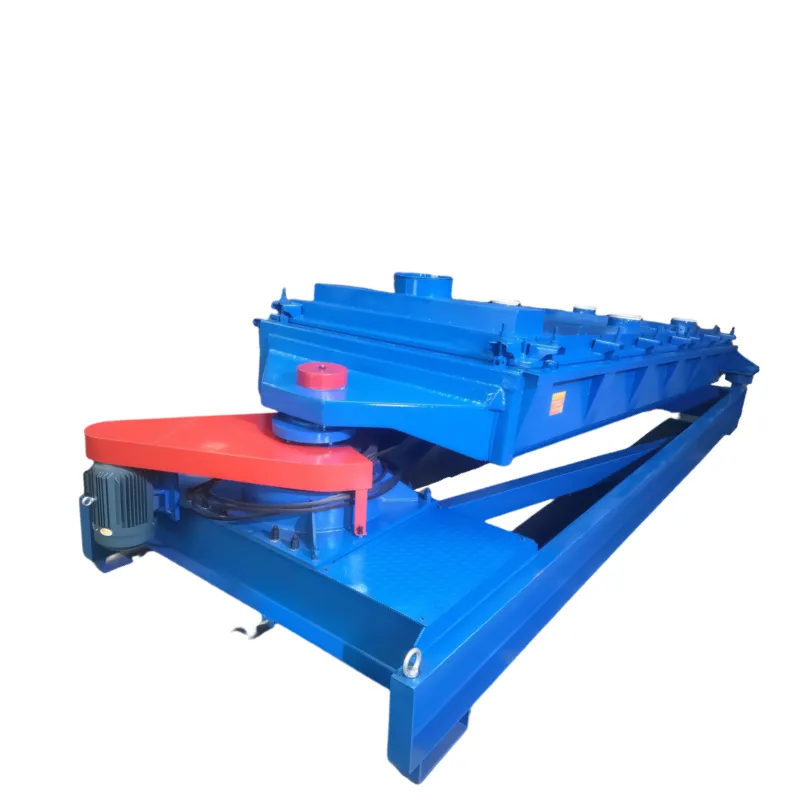
Significance of Cleaning Rotary Sifters
In the food industry, rotary sifters are an essential part of the food processing system and are used to manage powders, granules, and bulk ingredients in the baking, dairy, beverage, and grain production sectors. As part of the global food safety guidelines, rotary sifters still need to be cleaned often, and thoroughly, to prevent cross-contact, bacterial growth, and product recalls. Cleaning also helps to clear clogged screens, and provides even separation, and helps to clear off spec. Cleaning removes the need for unplanned downtime. Real world examples of regular screen and flushing systems in an operational flour mill and in processing powder soy milk demonstrate that the standard cleaning procedure is essential in maintaining a consistent output while prolonging the operational life of the system's components. In food production, maintaining a good cleaning routine helps to preserve the company’s good professional standing and helps to keep the end consumer safe. Proper hygiene systems is a key component in quality assurance for food production.
Normal Dry Cleaning Method
A standard dry cleaning procedure is often the first step of maintenance between product batches, and is often used for the processing of dry food ingredients that are non-sticky and water-sensitive. The process of standard dry cleaning involves shutting down the system, and locking on a maintenance tag to ensure the safety of the operators. Dry cleaning systems also use screens and walls to help remove dry cleaning materials and to help prevent the need for draining and to assist in controlling cleaning-related moisture. Cleaning dry vacuum systems also contain food grade vacuum systems to help remove and control dry contaminants and to prevent the spread of dry cleaning and food contaminants. The dry cleaning also helps to maintain the accuracy of the screening, and reduces the need for frequent washing, Thus, it helps to sustain operational efficiency in all systems that utilize screen and drum components.
Best Practices for Wet Cleaning
In order to follow strict hygiene standards wet cleaning is needed for sticky residues, oil-containing materials, or after product changeovers. Careful disassembly of all detachable parts, such as screens, seals, and end covers, is performed. Food safe neutral or alkaline cleaners, approved for food contact surfaces, are used to break down fats, proteins and starches. Stubborn deposits are removed more easily if soaking is done in warm water of 50 to 55 degrees Celsius. Soft sponges or brushes that do not scratch surfaces help in stainless steel cleaning to prevent subsequent bacterial infections from being hosted. Cleaning agents are completely removed through high pressure low volume rinsing followed by drain drying in a dust free area. Wet cleaning helps to remove invisible biofilms, helping comply with 3rd party audits by helping to meet the requirements of equipment that contacts food directly.
Protocols of Disinfection and Sanitization
Disinfection is performed after cleaning is complete to kill off microorganisms and is safe for food products that are susceptible. Approved quaternary ammonium compounds and solutions of hydrogen peroxide within the correct concentration and contact times may be used as food safe disinfectants. These agents are effective at reducing bacterial, mould, and yeast counts, and do not leave residues that are harmful. All internal and external contact surfaces are treated uniformly, including the joints, fasteners, and sealing surfaces. After contact time, surfaces are rinsed with certified drinking water, dried by air completely, and then reassembled. Regular microbial analysis is performed to prove that sanitization was effective. For the dairy, baby food, and ready to eat product lines, where there is no permissible contamination, this is an essential layer of protection.
Maintenance & Inspections After Cleaning
Long-term functionality as well as adherence to regulations is protected by post-cleaning maintenance and inspections. Team members assess the screens for wear, obstructions, or damage, and respond to wear by replacing parts, to ensure separation efficiency. The integrity of seals and gaskets is checked to ensure cracking or worsening does not lead to leakage or the contamination. Bolts are fastened to specification, and rotation is trouble free and quiet. The cleaning record includes the date, the cleaning method, the chemicals used, and the name of the cleaning operator, enabling traceability for audits. Inspections done preemptively lead to breakdowns becoming less frequent, and the quality of output remaining steady. When rotary sifters are properly maintained, the reliability of their operation is good and the total operational cost is reduced over the years.
Equipment Construction & Support for Hygiene
In the production of food, how equipment is made determines how easy to clean it is. Rotary sifters made from 304 and 316L stainless steel and which have been polished, provide smooth and uniform welding, and cause the formation of rounded corners and will have no dead zones where material can collect. No tools are required for disassembly, and therefore, cleaning time is reduced considerably. At Zhongren Machinery, we specialize in the design of food grade screening and conveying systems and all products are manufactured using the principles of hygienic design. For the food applications of flour, starch, soy milk powder, and others, we offer tailored and customized cleaning instructions, and post-sale support. As a result of our global supply chain and strong manufacturing capability, we are able to help our customers manage operational excellence and sustain high hygiene levels while optimising their production uptime.